

In the world of swimming pool construction, the bond beam represents one of the most crucial elements, ensuring the structural integrity and longevity of a pool. A bond beam is a horizontally reinforced concrete beam that forms the top edge of the pool walls. This structural component is vital for distributing stress and supporting features like coping, tile, and decking that frame the pool.
Purpose of the Bond Beam
The primary purpose of the bond beam in a shotcrete swimming pool is to provide a solid, reinforced frame that withstands the various forces exerted by water pressure, soil movement, and the weight of the pool’s edge and surrounding structures. It acts as a unifying element that ties the vertical wall panels together, creating a continuous, sturdy rim around the pool’s perimeter.
Variations in Size and Steel Reinforcement
The specifications for a bond beam, such as its size and the amount of steel reinforcement, can vary significantly depending on site conditions. Factors such as soil type, pool size, and the local climate all play critical roles in determining these specifications. For instance, in areas with expansive clay soils, a larger and more heavily reinforced bond beam may be necessary to counteract the soil’s shifting and swelling tendencies. Similarly, larger pools or those designed with higher walls may require thicker beams with additional rebar to ensure stability and prevent structural failure.
The following image is a sample of typical engineering for bond beam construction from Pool Engineering Inc (contact engineer to provide a site specific design for your project).

Raised Bond Beam: Definition and Importance
A “raised bond beam” refers to a bond beam that extends above the normal water line, often seen in infinity or other creative pool designs where the raised beam is used as a retaining wall. This design element not only adds an aesthetic dimension but also poses unique structural challenges. Raised bond beams are more exposed to environmental factors and thus require careful consideration regarding drainage, waterproofing and reinforcement.
The raised bond beam on this pool serves a dual purpose. It is a beautiful water feature wall that anchors the backyard space and it also serves as a retaining wall for the rear slope.

Importance of Waterproofing & Drainage
Waterproofing is crucial for any swimming pool, but it becomes even more critical when it comes to raised bond beams. Effective waterproofing should be applied on both the positive (exposed to water) and negative (opposite of water exposure) sides of the beam. This dual-sided approach prevents water ingress, which can lead to structural weakening, efflorescence, and other moisture-related damages. By using quality waterproofing materials and techniques, you can protect the bond beam from both sides, thereby enhancing the pool’s durability and maintaining its aesthetic appeal over time.
Hydrostatic drainage, sometimes referred to as “French” drains are required to remove water build up from behind walls quickly. Often times, a combination of drainage composite material is used along with drainage to protect raised beam walls from excessive water migration.


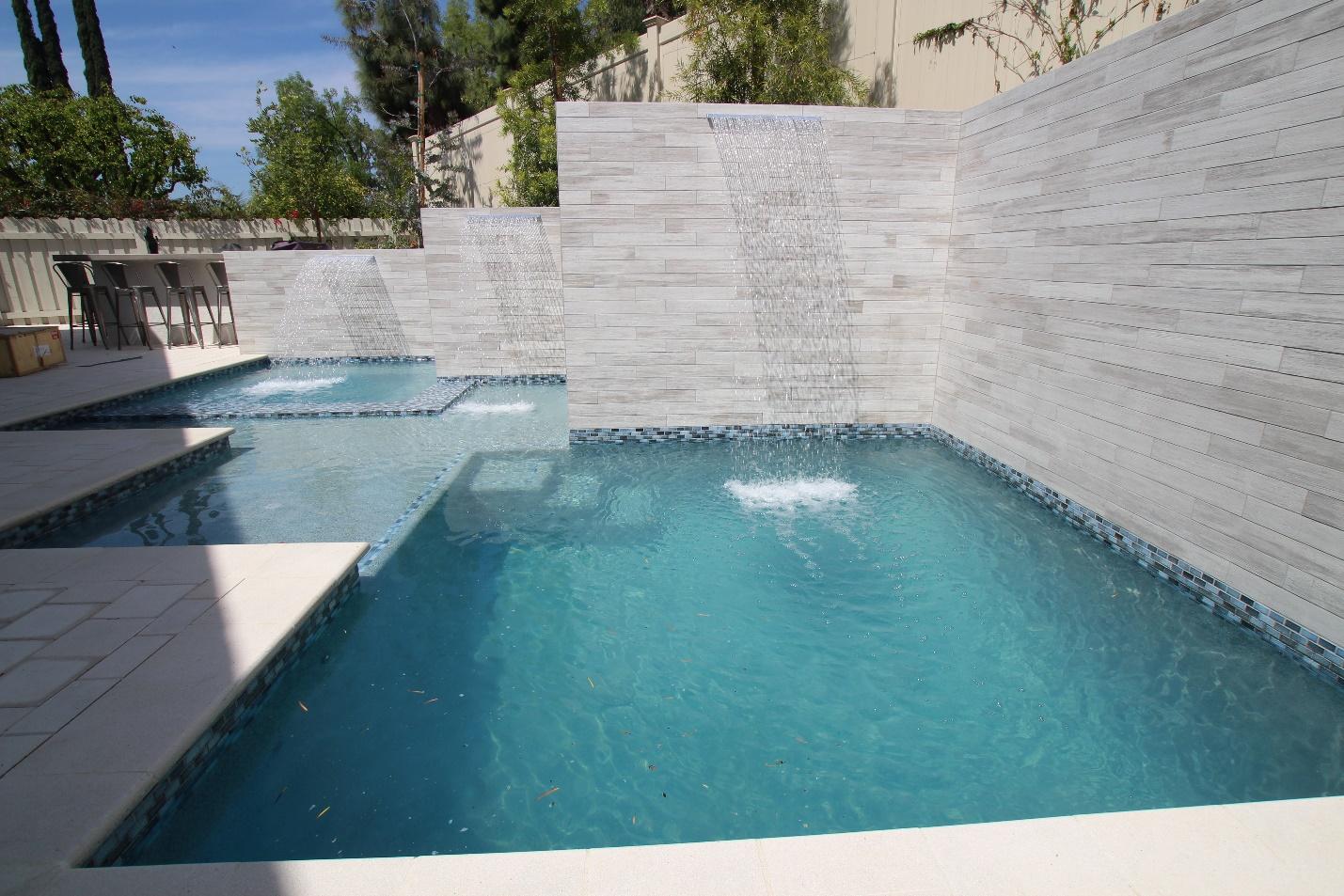
“Streams Come True” In this project, the pool raised bond beam serves as a large retaining wall to enlarge the backyard and provide space for a pool, spa, and baja shelf.

Understanding the role and requirements of a bond beam in shotcrete swimming pool construction is essential for any pool owner or builder. By properly sizing and reinforcing the bond beam, and ensuring comprehensive waterproofing, especially in raised designs, you can significantly enhance the structural integrity and longevity of the pool. This knowledge not only contributes to a safer swimming environment but also optimizes the investment by minimizing future repair needs.
by Scott Cohen, Construction Defect Expert Witness


